ServicesStorm Doors
Storm Doors in Terrell
A good storm door adds a layer between the weather and your front door, and lets you open the house to a breeze without letting bugs in. We help you pick the right style, measure the opening carefully and fit it so it closes quietly every time.
A second layer at your entry, and when it is worth adding
A storm door is a lighter outer door fastened to the exterior trim around your entry. It does two things well: it keeps rain, sun and wind off the door behind it, and it gives you a screened opening on mild days. It will not cure a leaky or damaged entry door, and if that is the actual issue, we will tell you so.
It is a good fit when your front or back door is in solid shape but weathers hard, when you want air moving through your home in spring and fall, or when the storm door you have now has a twisted frame, a ripped screen or a closer that bangs. If the main door is the part that is failing, the Entry Doors page covers that work.
What the work includes
Choosing style and glass
We look at full-view, mid-view and retractable-screen designs together, standing at your actual entry rather than flipping through a brochure. If the opening catches hard afternoon sun, we show you which glass options handle it best.
Measuring the opening
We take the width at the top, middle and bottom and check the trim for square. Few openings are perfectly true, and those readings decide the door size and expander that will sit cleanly in yours.
Taking out the existing door
Where an old storm door is in place, we unhang it, remove its fasteners and leftover hardware from the trim, and take the old unit with us when we leave.
Hanging the door and hardware
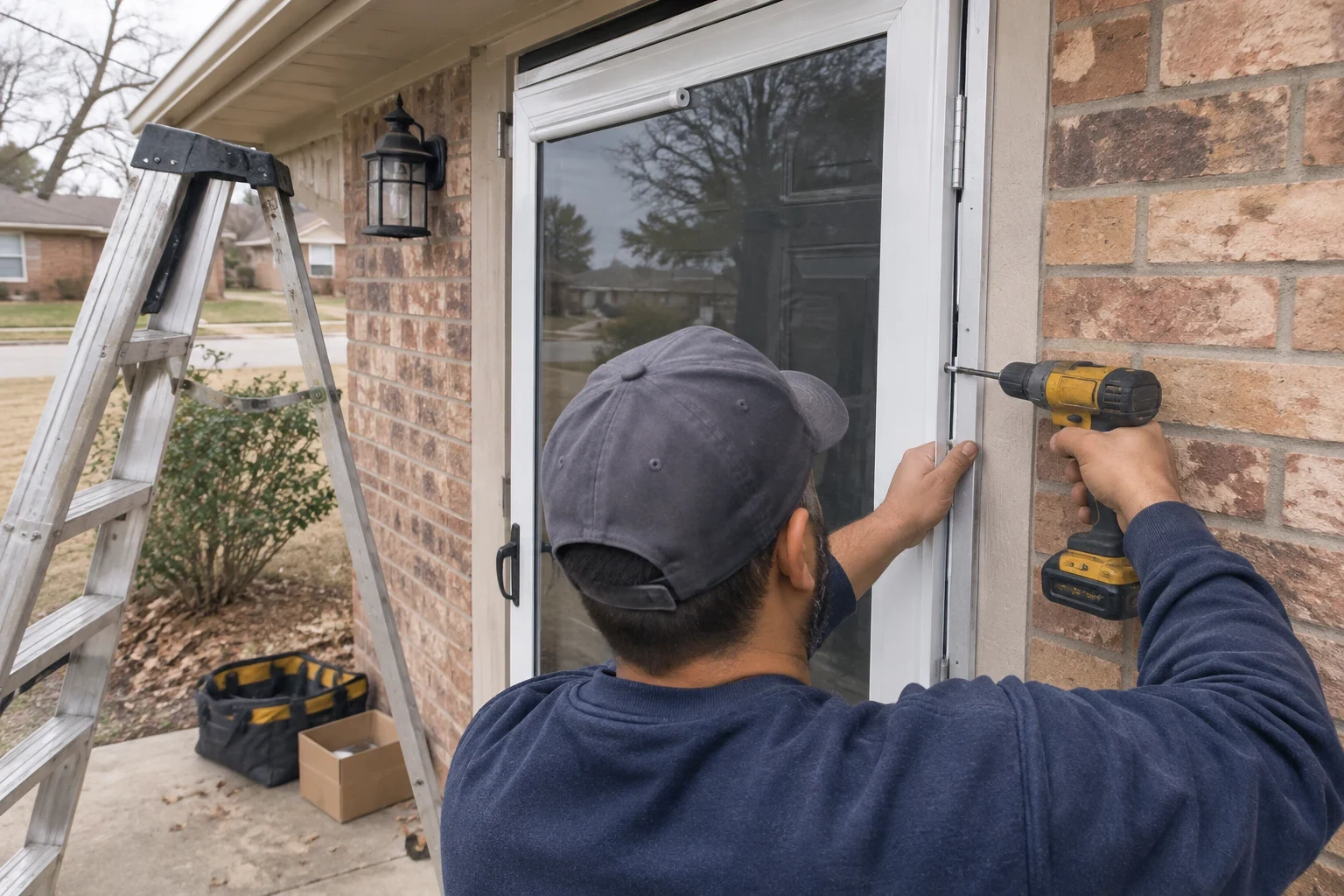
The new door goes up on its hinge rail, and the expander is cut to close the gap at the threshold. We mount the closer, the wind chain when one is included, the sweep and the handle set, then tune the latch so it engages with an easy pull.
Final adjustment and cleanup
We dial in the closer so the door finishes its swing firmly without a bang, confirm the sweep meets the threshold, and leave your entry swept and clear.
When your current storm door has run its course
The closer bangs or won't hold
A worn closer or a frame that has sagged lets the door crash into the jamb or sit partly open. Parts for older models are often hard to match.
Daylight around the edges
Light under the sweep or along the latch side means wind and insects have a way in. At that point the door is no longer shielding your entry.
Twisted frame or cracked glass
A gust can catch the door while it stands open and bend the frame or hinge rail. After that, it rarely closes square again.
Screens that fight you
A ripped screen, or a seasonal panel that sticks in its track, makes the door more trouble than it is worth.
Front door finish wearing early
If the paint or stain on your entry door weathers fast, a storm door can slow that wear. The glass you choose matters here, and the questions below explain why.
How a storm door installation runs
- 1
Free in-person consultation
We visit your home, study the opening and the entry door behind it, and go over styles, colors and hardware with you. Your quote is clear and spelled out, with nothing left open to guesswork.
- 2
Ordering to your measurements
After you decide, we order the door sized to the opening we measured. When it comes in, we call to set an installation day that works for you.
- 3
Installation day
We cover the floor just inside the entry, remove any old door and probe the trim for soft wood before fastening anything. If what we find changes the plan, you see it before we continue.
- 4
Trying it together
Before we pack up, you work the door yourself while we watch the latch and closer, and we demonstrate how the screen or glass panels change over. We finish with simple care tips and any questions you have.
What drives storm door pricing
Storm door prices vary more than most people expect, and most of the gap comes from design and hardware. Here is what builds your total, so your quote is easy to follow. If it helps, we also offer $0 Down on the whole project and 0% Financing options.
- Door style
- A simple mid-view door is cheaper than a full-view model with swappable panels or a retractable screen built in.
- Glass type
- Tempered glass is standard. Low-E or other upgraded glass costs more but holds less heat against the main door.
- Opening size and fit
- Standard openings cost the least. Very wide, very tall or badly out-of-square openings can call for a bigger expander or another door size.
- Finish and hardware
- The color, the handle style, adding a keyed deadbolt and matching your entry door hardware all change the price.
- Condition of the trim
- Storm doors fasten to the outside trim. If that wood is split or soft, it has to be repaired first, and we flag it during the consultation.
Storm door questions, answered
Something not covered here? (972) 945-9592
Can a storm door damage my front door?
It can, when a full-glass storm door covers an entry door that takes direct sun for hours. Heat gets trapped in the gap between the two and can blister some paint finishes or warp vinyl trim. We note which direction your entry faces and suggest a glass option or a venting style that lets that heat escape.
Will a storm door lower my energy bills?
A little. The pocket of still air between the doors adds a modest buffer, and the gain is larger in front of an older door. It does not replace a tight, well-sealed entry door, and we will give you a realistic sense of what to expect for yours.
What is the difference between a retractable screen and interchangeable panels?
A retractable screen tucks away inside the door frame when you are not using it, so there is no spare panel to keep in the garage. Interchangeable panels trade glass for screen as the seasons change and offer slightly more glass. Both are good choices; the deciding factor is how often you expect to switch.
My door opening is not a standard size. Can you still fit one?
In most cases, yes. Storm doors come with an adjustable expander that takes up small differences in height, and we measure your real opening in several places so the door we order matches it, not a rough guess.
Which way should the door swing?
In most entries the storm door's hinges belong on the same side as the main door's hinges, which keeps the two from crowding each other when both are open. Before deciding, we also look for a porch light, railing or adjacent wall that the handle might strike.
See your options at your own front door
We will look at your entry, show you door styles and finishes, and give you a clear quote. We serve Terrell and nearby towns including Forney, Kaufman and Rockwall.